Wednesday

Last glimpses of summer. Hibiscus

 End of summer brings a lot of color to my backyard organic garden. Bright reds and soft pinks give it a blast of color to say goodbye to summer and hello to the fall planting season.

This time of year my garden is filled with the large and colorful Hibiscus. Some of them measure a foot across. Paper plate Hibiscus really earn their name, being as big and as round as paper plates.

Keeping an organic garden is not as hard as you may think, there are sound techniques to grow healthy plants without all the harsh chemicals that may be harmful to our health. If you want to learn more about organic gardening check Organic Gardening Now

Friday

The Surprise Butterfly

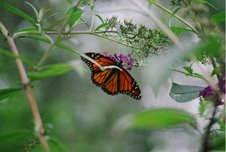
A was quite surprised by the appearance of this  butterfly (or moth). This being the first time that I have ever seen this bug. Hopefully I can get some help identifying.Fuzzy body and nearly 3 inches across the wings. Took a good video of the little flyer and took a few pictures, but have had no luck figuring out what it is.
Flew into my garden and has not been seen since that day.

Sunday

Bonsai

Just a quick post. A number of my bonsai growing on the shelf.  Lots going on in the backyard garden with wiring of some of the trees and leaf pruning of others. June and July are the months that I take off the leave of most of my deciduous trees, a process that increases the overall number of leaves and reduces their size. After a few years of the annual step your tree will have a much better scale, it will look like a really big 'little tree'.

Where does the time go... a glimpse at bonsai...

Now as the days are getting longer and  longer I have found some time to be in the garden and work on some of my many bonsai trees. Not that I am lacking in material to show you and work on, it is the time to get it on the blog. So here is a little tease of some of what is coming up.


Step by step I have been documenting and photographing the little trees' progress through their training. Here are some random pictures of some of the bonsai tree collection.Hopefully my work will inspire some new bonsai enthusiasts.

Creating New Bonsai

Bonsai is a very fascinating art form, combining both design and science. When designing Bonsai the grower has to take into account that the tree needs to stay alive. Providing the tree with the best environment to continue to mature, giving the Bonsai more character as it ages.

 The tropical varieties can make very good indoor Bonsai, where as the northern varieties like maple, black pine,cedars and elm need to be wintered outdoors giving them a dormant period of growth. The Norfolk Island Pine makes a very good indoor Bonsai and can be enjoyed in bright light.
Another interesting Bonsai is the tropical African Jade 'Elephant Toes'.  This tree has been in training for 3 years, starting from a cutting it eventually was trained to grow root over the rock style. Using only organic gardening techniques, I think, get the best results. For more organic gardening tips. With out the harsh chemicals it helps keep the indoor environment healthier.

Monday

Organic Gardening Do’s and Dont’s

Organic Gardening Do’s and Dont’s
Organic Gardening Now


You’ve learned a lot about organic gardening over the course of these lessons. Now I’m going to share my top ten tips that will help you get the most of your garden:


•Do use compost regularly. Composting isn’t something you do once every couple years. You can and should add compost to your garden regularly (especially at the start of the growing season). That’s because your soil tends to use up its nutrients. So even soil that’s nutrient-rich and healthy right now needs compost to stay that way.

•Don’t forget that prevention is the best cure. If you know what your particular plants are most vulnerable to (which depends on the plant species and where you live), then you can prevent pests and diseases before they become a problem. For example, you can plan ahead and use companion planting to repel the common pests in your area.

•Do share your results with your neighbors. No, you don’t want to preach to your friends and neighbors. But you do want to share your results and show them just how lush, green and pest-free an organic garden can be.

If you can persuade your friends to stop using dangerous toxins, that’s great for the earth. And if you can persuade your closest neighbors to stop using toxic chemicals, that’s good for your garden too, because the neighbors aren’t killing your beneficial insects.


•Don’t become impatient. Organic gardening takes time. It takes time to let your compost do its work so that your soil becomes rich and healthy. It also takes time for pest-control methods to work, such as building a beneficial insect population.

Be patient. If you’re coming from a traditional background, you might be tempted to just dump synthetic fertilizer or toxic chemicals on your plants to get results quicker. But that will only set you back weeks if not months (or an entire growing season) if you wish to do things naturally again.


•Do use cover crops. Some organic gardeners – even those with small plots – plant a fast-growing cover crop such as buckwheat. About three or four weeks before you’re ready to plant, mow the buckwheat and then work it into the soil. Now you have a natural compost working to add nutrients to the soil!

•Do take care of problems when you first notice them. If you see a leaf turning yellow, a white mildew starting to appear, black spots or you see pests, take care of the problem right away… because the longer you wait, the harder it will be to get it under control.

•Don’t chase away other allies like frogs and lizards. You already know that birds and certain insects are your allies. But remember that critters like frogs and lizards are too, as they eat a lot of insects.

•Do use collars on your vulnerable plants. If you have plants that are vulnerable to cutworms, you can use little plastic or cardboard collars at the bottom of the stem to discourage worms from munching on the stem or climbing up on the plant to eat the leaves. For best results, insert them just below the soil level.

•Do use bacillus thuringiensis if leaf eaters are destroying your plants. This is a type of bacteria that you can buy at an organic gardening supplies store, and it prevents caterpillars and similar leaf eaters from digesting property. It’s a great alternative to some of the organic sprays.

•Do hand-pick your pests. If you see pests on your plants, pick them off by hand, as there may only be one or two, or this pest might be the one that the spray missed. Just be sure you know the difference between pests and beneficial insects!

And there you have it: Ten tips every organic gardener ought to know. Good luck with your garden!

Another Japanese Shoshin Maple Bonsai

Maple trees make for very good bonsai. With leaf pruning and some wiring it is a lot easier to see the effects of your bonsai training. The twisty nature of some maples lend themselves to interesting bonsai trees. This tree although a young bonsai tree has the character of a much older tree.

Outdoor bonsai trees can only displayed indoor for a very short time, too long and you may end up killing your tree and all the time and love you put into it. So when you  are looking to display any bonsai, please take care that it does not stay too long.

Wednesday

Japanese Shoshin Maple Bonsai


The first display of a young Shoshin Japanese Maple. Bonsai is a cool way to shape nature to fit into a space where you can enjoy it. This tree is showing great promise, with some maturity and and pruning it will become a very nice bonsai. Already looking good with some nice trunk motion.
 The added plastic Sushi was not my idea, this tree as many of my trees is on display for one week at Lee's Japanese. A very good informal restaurant in northern New Jersey.

Japanese Maple On Rock

This maple started out as an Air-layering from an older tree that needed to be brought down to scale. Earlier in the spring I started to create this new Bonsai. Getting roots to grow takes some patience and some easily learned skills.

Friday

Japanese Maple Bonsai

The Japanese Maple is a favorite among Bonsai collectors, the rich colors and the ease of training make it a fun beginner and advance Bonsai. Here is an 3 year old tree that has been in and out of ground to gain size and age. Maples are good growers and if trimmed in June will produce smaller leaves.


Stripping off the leave with sharp sissors will help the tree grow an increasing number of leaves. The new leaves that grow will be much smaller and brighter in color. As the leaves grow in you may want to take off any that grow too large in order to keep scale.

Once all the leaves have been removed it is a good time to look at the overall shape and make some of the adjustments to its look. This tree has an uneven distribution of branches and needs to be changes.
Watch for my tips on How to Wire Your First Bonsai Tree

Thursday

Cedar Forest Bonsai

Eastern cedar trees have a unique look about them and make for good bonsai tree material. Working with a natural lava stone a small forest design was created. These two pictures show before and after a strong pruning. I have always been facinated with bonsai trees and the art of bonsai.

So hopefully I will be back to posting photos of the many bonsai trees that I have been working on, my collection has grown to over 400 trees varying in age from a couple of years up to 55 year old Juniper bonsai tree. While most of my trees are outdoor bonsai, I do have some tropical varieties of bonsai trees in my collection.

Saturday

Blue Spruce Bonsai


This grafted spruce is being trained over volcanic pumice stone. The picture is from when it was on display in Lee's Japanese Restaurant. When displaying an outside tree indoors it is important not to let it over stay, outdoor trees need to be outdoor to survive. For the winter most outdoor Bonsai trees need protection from the deep freezes and harsh winter winds.
So as winter is sure to arrive, protect theose tree so they will survive.

African Jade Bonsai Tree


Here is one of my larger Bonsai. This is an african jade also know as elephant toes. Most of  my trees are outdoor Bonsai, though this one can't be allowed to freeze. Many of the trees that you see in the malls this time of year are tropical bonsai, so if you are considering purchasing one or  more, then take the time to learn what your new tree will need to survive.
 I collected this tree from Hawaii about 10 years ago. When it arrived from the islands the container and plant was badly broken. The original planting was in a large piece of lava, it was repotted and trained in cascade. Estimated to be 25 years old.

Thursday

Bonsai Mountain

Bonsai tree
A freshly planted Bonsai. My intention is to grow a mountain forest. I will post updates every few months.